














Prime Ministers of Nepal: A Journey Since 2008

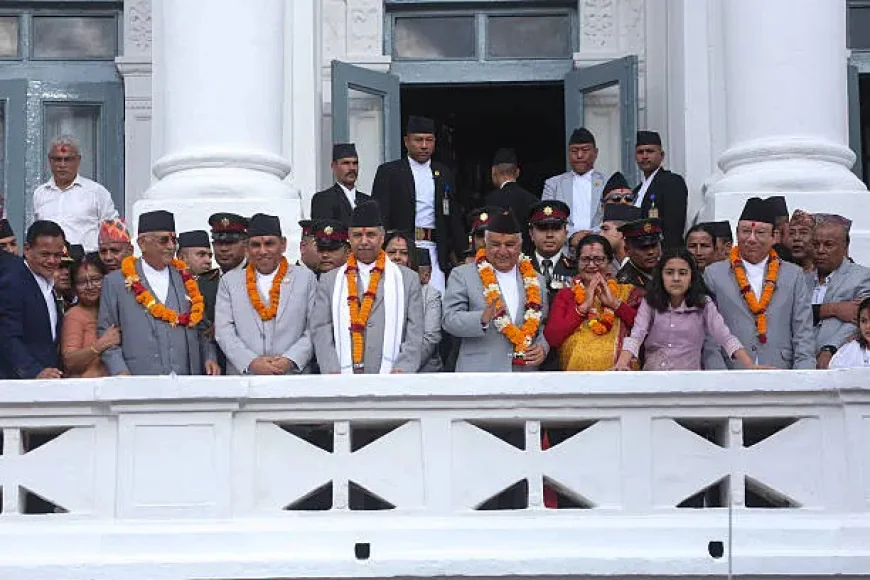


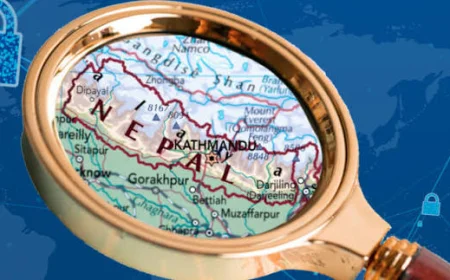
The declaration of Federal Democratic Republic Nepal occurred in 2008, creating a new era of rapidly changing politics led by numerous different Prime Ministers. The history has been filled with uncertainty through most of this period, starting from the first government formed after the end of royalty with Pushpa Kamal Dahal as prime minister and continuing to the currently-serving interim prime minister Sushila Karki. Each prime minister has dealt with challenges related to various controversy and political stability in their own way.
The period from 2008 to 2013 was dominated by the leadership of the Maoists and the UML parties. Pushpa Kamal Dahal (Prachanda), Madhav Kumar Nepal, Jhala Nath Khanal, and Khil Raj Regmi were four of the main leaders that contributed to this period and helped move towards forming a federal democracy. The Constituent Assembly formed the basis for political restructuring in Nepal.


From 2014 to 2017, priority was given to solving three areas that were, developing a constitution, establishing a stable political environment, and ensuring that Sushil Koirala, KP Sharma Oli and Pushpa Kamal Dahal and their respective coalition governments have all the resources necessary to create an environment that maximizes individual democratic rights and provides the public with confidence in the federal system of government.


The years 2018 through 2022 provided both K. P. Sharma Oli and Sher Bahadur Deuba with opportunities to lead their respective governments through periods of significant political instability while continued strengthening the federal governance framework of Nepal. Each leader experienced the unique challenges associated with coalition governments and made great efforts in pursuit of continuing political stability in the country.
Since 2022, Pushpa Kamal Dahal, KP Sharma Oli, and interim PM Sushila Karki have led Nepal as part of a coalition government. The three prime ministers and their tenures demonstrate how stable governments cannot exist within an unstable political environment but require a coalition of various parties for longevity.
As noted in the previous paragraph, throughout the years of leadership, all three of these prime ministers faced the challenge of balancing party alliances with national priorities. The three party ideologies (Maoist Centre, Communist Party of Nepal (UML), and Nepali Congress) all made an impact on the country's young democracy with each of these prime ministers had their part to play in advancing reform efforts. Thus, the future political evolution of Nepal will depend on how its prime ministers continue to work to create and sustain a strong federal democratic system.
What's Your Reaction?
 Like
0
Like
0
 Dislike
0
Dislike
0
 Love
0
Love
0
 Funny
0
Funny
0
 Angry
0
Angry
0
 Sad
0
Sad
0
 Wow
0
Wow
0