


Democracy After the Revolution: Are We Really Heard?

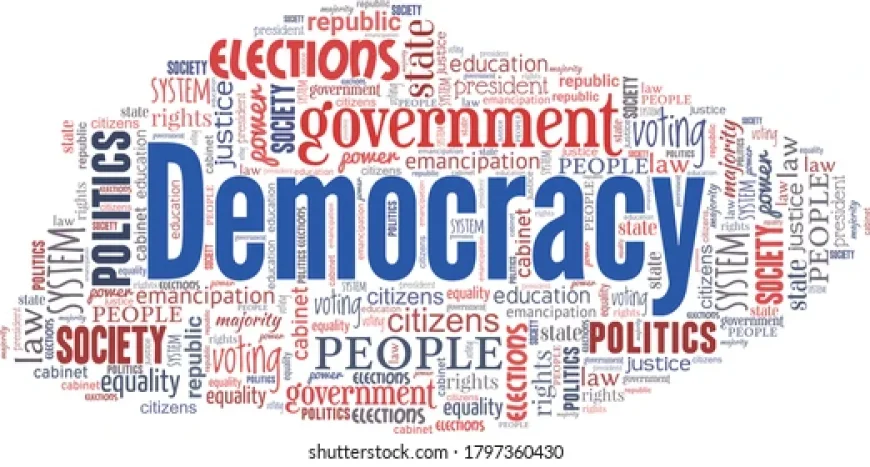


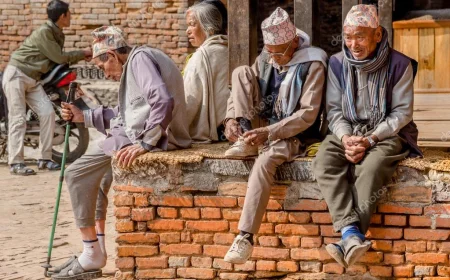
Growing up in Nepal, the word change has always been connected with politics. Our history is filled with movements, struggles, protests, and revolutions that promised a different future. Generations before us fought against systems where ordinary people had little or no say in how they were governed. Democracy came with the hope that power would no longer belong only to a few, but would be shared with the people.
The idea was simple: the people would choose their representatives, and those representatives would work for the people. A government would not just rule over citizens; it would represent them. The phrase “by the people, for the people, to the people” became a symbol of this hope.


But after years of political transformation, a question remains: are we really heard?
Democracy is often measured by elections, constitutions, and institutions. These are important foundations, but democracy is much more than the ability to vote every few years. A true democracy is also about whether citizens feel their voices matter between elections. It is about whether a farmer from a remote village, a student struggling with opportunities, a young person searching for employment, or an ordinary citizen dealing with everyday problems feels represented by the decisions made in power. The reality is that there is often a distance between those who create policies and those who live with the consequences of those policies.


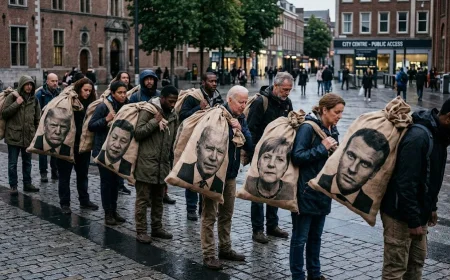
A law created inside a government building can change millions of lives outside it. A decision made by a small group of people can influence the future of an entire generation. This does not necessarily mean that every decision-maker ignores the people, but it highlights a larger problem: the gap between power and the public.
After political changes, people often expect immediate transformation. They expect better systems, stronger institutions, economic opportunities, and a future where their struggles are understood. But when those expectations are not met, disappointment grows.
For many young people in Nepal today, politics has become something they observe rather than something they feel connected to. They see debates, promises, and conflicts among leaders, but often question whether these discussions reflect the reality of ordinary life.
Young people are entering a world where many are thinking about leaving the country for education, employment, or better opportunities. The question is not only why they leave, but what makes them feel that their future might be more possible somewhere else. When a generation begins losing faith in its own system, it becomes a reflection of a deeper issue.
However, democracy itself is not the problem. The problem is how democracy is practiced.
A democratic system gives people the right to question authority, criticize leaders, organize movements, and demand accountability. These freedoms are powerful. They allow society to correct itself. The ability to openly ask, “Are we being represented?” is something that many societies throughout history fought to achieve.
But democracy cannot survive only through participation during elections. It requires continuous involvement. It requires citizens who do not only react when problems become impossible to ignore, but who remain engaged with the decisions shaping their lives.
At the same time, those in power must understand that leadership is not only about holding positions; it is about responsibility. A government is not successful only because it wins elections. It is successful when people feel that their lives have improved, their concerns are considered, and their voices are valued.
Maybe the biggest question after every revolution is not whether the old system ended. It is whether the relationship between power and people truly changed.
Because replacing leaders is one thing. Changing the way power works is another.
A revolution can bring a new beginning, but democracy requires constant effort to keep that beginning alive. The true measure of democracy is not only whether people are allowed to speak it is whether someone is listening.
What's Your Reaction?
 Like
0
Like
0
 Dislike
0
Dislike
0
 Love
0
Love
0
 Funny
0
Funny
0
 Angry
0
Angry
0
 Sad
0
Sad
0
 Wow
0
Wow
0