




















Nepali Stock Market Under Pressure Amid Weak Sentiment and Cautious Trading

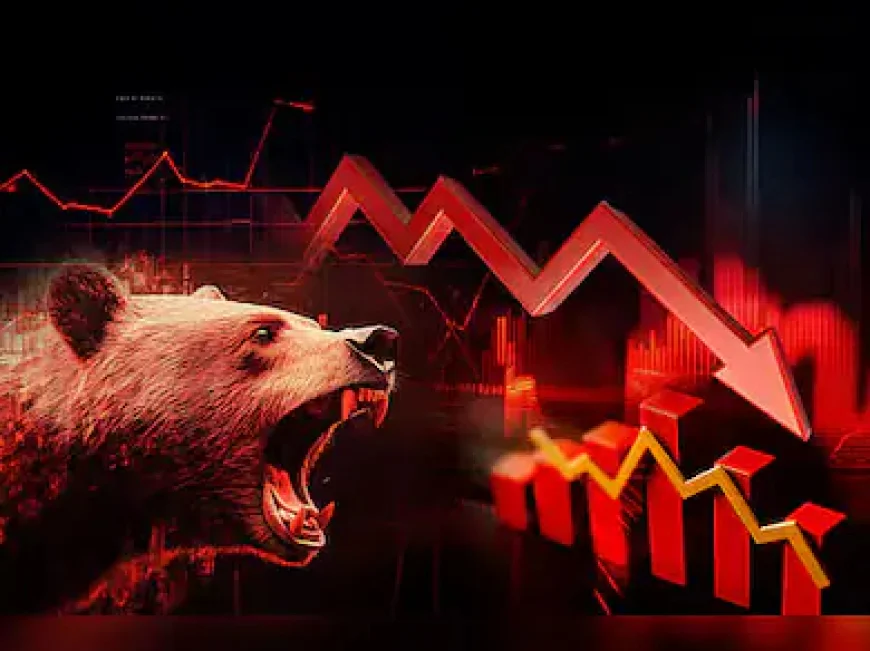


The Nepali share market has been witnessing a continued downward trend, with the Nepal Stock Exchange (NEPSE) index falling to its lowest level in four months on Thursday. The persistent decline reflects growing investor caution, reduced trading activity, and uncertainty about the near term direction of the market. While some technical signals hint at possible stabilization, overall sentiment remains weak and undecided.
On Thursday, NEPSE dropped to 2,651 points, the lowest level since mid-February, when the index stood at 2,648 points. Although the market had earlier climbed to a recent high of 2,969 points, it has since lost around 317 points, indicating a significant correction over the past months. This steady decline has gradually eroded investor confidence, pushing the market into a phase dominated more by caution than aggressive buying.


One of the most visible impacts of this downturn is the continuous fall in trading volume. On Thursday, total turnover stood at Rs. 2.83 billion, significantly lower than the Rs. 4.41 billion recorded on Wednesday. This marks the lowest level of turnover since early May, when daily trading had consistently remained above Rs. 3 billion. The sharp decline in liquidity suggests that investors are becoming increasingly selective, while overall participation in the market is shrinking.
Despite the weak turnover, there are early signs of shifting behavior among investors. The number of companies whose share prices increased has gradually improved over the past few sessions. On Tuesday, only 23 companies saw price gains, but this number rose to 62 on Wednesday and further to 83 on Thursday. This gradual increase suggests that while broad market sentiment remains weak, selective buying is slowly returning.


Market analysts interpret this trend as a sign that investors are no longer engaging in aggressive, widespread selling or buying. Instead, there appears to be a growing tendency toward stock selection, where investors are carefully choosing specific companies rather than investing across the board. However, this does not yet indicate a strong bullish reversal, as overall market momentum remains negative.
At the same time, selling pressure appears to be easing slightly. Many investors seem reluctant to sell at lower prices, possibly waiting for a better entry or exit point. This has led to a “wait and watch” situation in the market, where both buyers and sellers are hesitant to make strong moves. However, since the number of declining stocks still outweighs gainers, the market has not yet entered a clear recovery phase.
Large cap stocks have also played a significant role in the ongoing decline. Heavyweight companies such as Bishal Bazar Company, Nabil Bank, and Citizens Investment Trust have contributed to downward pressure on the index. Among them, Bishal Bazar experienced a sharp decline of Rs. 98 per share, closing at Rs. 4,200.
This single stock alone had a noticeable impact on the overall index movement. Its market capitalization dropped by nearly Rs. 4 billion in a single trading day, falling from Rs. 171.92 billion to around Rs. 168 billion. Despite NEPSE falling by only 8 points on Thursday, Bishal Bazar alone contributed approximately 2.29 index points to the decline, highlighting how a few large companies can significantly influence the overall market direction.
Such movements underline the sensitivity of NEPSE to high-cap stocks, where even small price changes in major companies can disproportionately affect the index. This further adds to volatility and makes short-term trends more dependent on a limited number of stocks rather than the broader market.
Technical indicators also suggest a state of uncertainty. Over the past three trading sessions, NEPSE has been consistently declining, but the rate of decline has been slowing down. The index fell by 26 points on Tuesday, 14 points on Wednesday, and only 8 points on Thursday. This gradual reduction in downward momentum may indicate that selling pressure is weakening, although it has not yet translated into a reversal.
Candlestick chart patterns over these days also show mixed signals. The market has displayed long wicks with small bodies over the past two sessions, forming what is known in technical analysis as a “doji” pattern. This pattern generally reflects indecision in the market, where neither buyers nor sellers are able to establish clear control.
The appearance of such patterns during a downtrend can sometimes indicate that the market is approaching a potential reversal zone. However, analysts caution that this is not a strong or guaranteed signal of recovery. Instead, it mainly reflects uncertainty and lack of direction among investors.
Looking ahead, the future direction of NEPSE is likely to depend on several key factors, particularly the upcoming monetary policy and the financial performance of listed companies. If monetary policy introduces supportive measures for liquidity and investment, it could help restore investor confidence. Similarly, strong quarterly or annual financial results from major companies could also provide a positive trigger for the market.
However, until such catalysts emerge, the market is expected to remain in a cautious phase. Investors are likely to continue monitoring economic indicators, policy signals, and corporate earnings before making significant investment decisions. For now, NEPSE remains in a correction phase, characterized by low confidence, reduced turnover, and cautious participation.
In conclusion, while there are early signs of stabilization in terms of reduced selling pressure and selective buying, the overall market trend is still downward. The presence of uncertainty, weak liquidity, and pressure from large cap stocks continues to weigh on NEPSE. Whether the market rebounds or continues its decline will largely depend on upcoming policy direction and corporate performance in the coming weeks.
What's Your Reaction?
 Like
0
Like
0
 Dislike
0
Dislike
0
 Love
0
Love
0
 Funny
0
Funny
0
 Angry
0
Angry
0
 Sad
0
Sad
0
 Wow
0
Wow
0