






















When Reality Becomes Optional: The Quiet Rise of “Believable Falsehoods” in the Digital Age

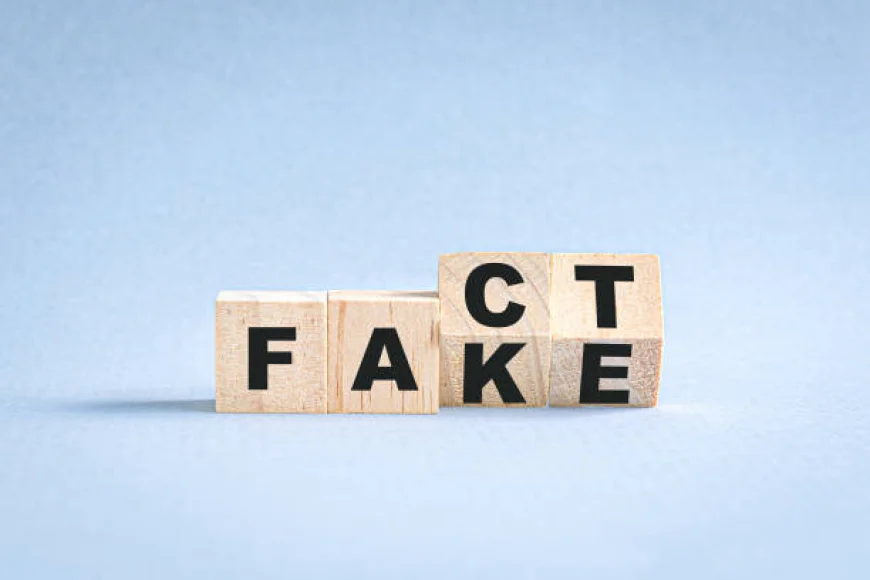


There was a time when fake news looked fake. Blurry photos, poorly written claims, exaggerated headlines with obvious grammatical errors. It was easy to dismiss them at a glance. But that era is disappearing. Today’s misinformation is no longer careless, it is carefully designed, emotionally calibrated, and often indistinguishable from reality. We are entering an age where falsehood does not announce itself. Instead, it blends in.
Across social media platforms widely used in Nepal and around the world, a new form of information disorder is emerging: not outright lies, but believable distortions. A video edited just enough to shift context. A headline that removes crucial background. A quote taken out of a longer speech. A voice clip generated by artificial intelligence that sounds identical to a real person. Individually, these may look harmless. Together, they reshape how reality itself is perceived. And the danger is not just deception. It is confidence in deception.


The Shift from Fake News to “Engineered Truth”
In earlier years of digital media, misinformation often relied on obvious fabrication. Today, it relies on subtle manipulation. The difference is important. Modern misinformation does not try to invent reality, it rearranges it.
A protest video, for example, can be shortened to remove the part where violence began from a different direction. A political statement can be cropped to suggest an entirely different meaning. A single frame can be pulled from a longer event and circulated as “proof” of something that never actually happened. With the rise of AI tools, this manipulation has become even more powerful. Deepfake technology can now generate faces, voices, and entire scenes that never existed. What once required technical expertise can now be done in minutes using accessible applications. The result is a digital environment where “seeing is believing” is no longer reliable.


Nepal’s Digital Reality: Fast, Viral, and Fragile
In Nepal, social media platforms have become one of the fastest channels for breaking news, public debate, and political discourse. But this speed comes with a cost: verification often lags behind virality. A single post on Facebook can reach thousands before journalists or fact-checkers respond. A short clip on TikTok can define public opinion within hours. WhatsApp forwards can circulate claims in closed groups where correction rarely reaches.
In this ecosystem, misinformation does not need to be universally accepted, it only needs to spread faster than the truth. Local incidents show how quickly narratives can shift. A partially edited video of a public event can trigger outrage. A miscaptioned image can spark blame. Even official statements are sometimes drowned out by emotionally charged content that spreads first and asks questions later.
Why People Believe What Isn’t True
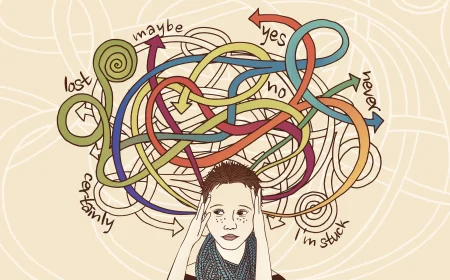
It is easy to assume that misinformation spreads because people are careless or uninformed. The reality is more complex. Modern digital platforms are designed around engagement. Content that triggers strong emotions like anger, fear, pride, or shock travels further and faster. As a result, users are constantly exposed to the most emotionally extreme versions of reality. Over time, this changes how people process information. Instead of asking “Is this true?”, many begin to ask “Does this feel true?” or “Does this match what I already believe?”
This psychological shift is powerful. When information aligns with existing beliefs, it is more likely to be accepted without scrutiny. When it challenges those beliefs, it is more likely to be rejected, even if it is accurate. The result is not just misinformation. It is selective reality consumption.
The Emotional Economy of Falsehood
Misinformation is not just a technical problem, it is an emotional economy. Outrage generates clicks. Fear generates shares. Shock generates attention. In such an environment, accuracy often becomes secondary to virality. Content creators, intentionally or not, learn that emotional intensity is rewarded. This creates a feedback loop. Platforms amplify emotionally charged content. Users engage with it. Algorithms interpret engagement as value. And the cycle continues.
Over time, truth becomes just another competing narrative, often less exciting, less immediate, and therefore less visible.
The Erosion of Trust
Perhaps the most serious consequence of this shift is not confusion, but distrust. When manipulated content becomes common, people stop trusting not only social media, but also journalists, experts, institutions, and sometimes even their own ability to judge what is real. This creates a dangerous cultural outcome: cynicism. Instead of asking “What is true?”, many begin to assume “Nothing can be trusted.”
When trust collapses, societies become easier to polarize. Cooperation becomes harder. Dialogue becomes defensive. Every claim is seen through the lens of suspicion.
The Human Cost of Digital Distortion
Beyond abstract debates about truth, there are real consequences. Individuals have faced harassment based on false allegations circulated online. Public figures have had reputations shaped by clipped or edited content. Communities have experienced tension due to misleading posts that spread faster than clarifications.
In some cases, misinformation does not just mislead, it harms livelihoods, relationships, and mental well-being. The speed of digital judgment leaves little room for correction or context. Once a narrative takes hold online, it is extremely difficult to undo.
The Challenge of Artificial Intelligence
Artificial intelligence has added a new layer of complexity. Unlike traditional misinformation, AI-generated content does not depend on existing footage or text. It can create entirely new material. A fabricated interview. A synthetic speech. A realistic image of an event that never happened. Even trained observers can struggle to distinguish between real and generated content. This raises a critical question: in a world where anything can be generated, what does proof even look like?
What Can Still Be Done
Despite the scale of the problem, the situation is not hopeless. Solutions exist, but they require collective effort rather than individual caution alone. Digital literacy must go beyond fact-checking. People need to understand how algorithms shape what they see, how emotional manipulation works, and how context can be removed from information. Media organizations need stronger verification systems and faster correction mechanisms. Platforms need to take responsibility for amplification, not just publication. But perhaps most importantly, users need to slow down their consumption habits. Not everything that appears first is true. Not everything that feels right is accurate.
Conclusion: Living With Uncertainty
We are no longer in a world where misinformation is an exception. It is part of the environment. The challenge now is not to eliminate it entirely, but to learn how to navigate it without losing perspective. Truth has not disappeared but it has become harder to recognize, easier to distort, and slower to arrive. In this new reality, the most important skill is not just knowing what to believe, but understanding why something feels believable in the first place. Because in an age where reality can be edited, generated, and amplified in seconds, certainty is no longer automatic. It must be carefully earned.
What's Your Reaction?
 Like
0
Like
0
 Dislike
0
Dislike
0
 Love
0
Love
0
 Funny
0
Funny
0
 Angry
0
Angry
0
 Sad
0
Sad
0
 Wow
0
Wow
0