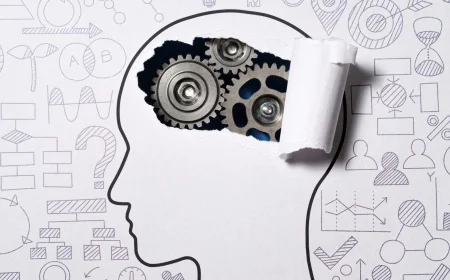
For years, the narrative surrounding artificial intelligence in the workplace was defined by an anxious, binary question: Will AI take my job?
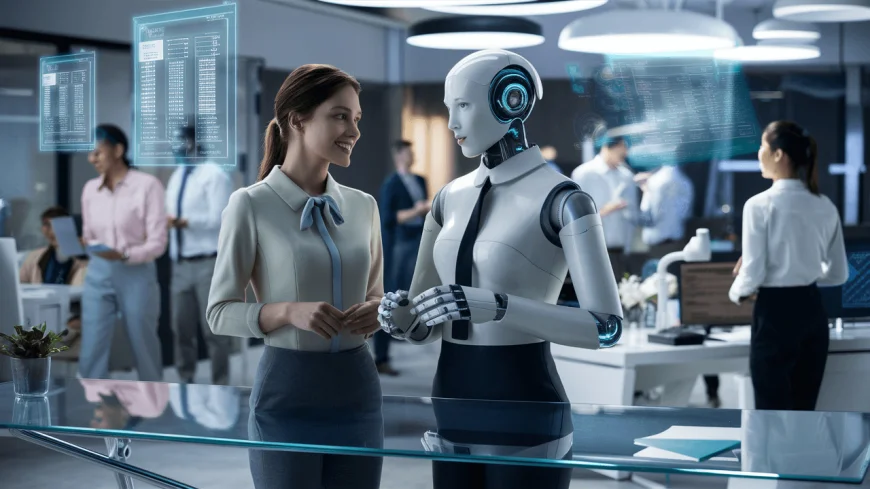
But as we settle into 2026, the reality has proven to be far more nuanced. AI isn't pulling up a chair to replace us; it's pulling up a chair next to us. The conversation has completely shifted from displacement to collaboration. According to Microsoft’s 2026 Work Trend Index, nearly half of all workplace AI interactions are now focused on cognitive work things like data analysis, creative problem-solving, and strategic thinking.
We have officially entered the era of the hybrid human AI workforce. But working alongside a digital colleague comes with its own unique set of unwritten rules, frustrations, and unexpected shifts in what it actually means to be "good at your job."
The Reality Shift: From Execution to Judgment
For decades, professional value was built on execution. If you could build a flawless PowerPoint deck, format a massive Excel sheet, or churn out a pristine first draft of a legal contract faster than anyone else, you were a corporate superstar.
Today, AI can do all of those things in roughly four seconds.
Because the baseline speed of execution has been completely flattened, human value has shifted dramatically from execution to judgment. Being fast doesn't matter as much anymore; being discerning does. The people thriving in this new environment are those who act less like factory workers and more like managing editors. They know how to prompt the system, but more importantly, they know how to spot when the output is subtly wrong.
The "Almost Right" Problem
If you've spent any time working with an AI assistant or digital agent, you've likely run into what developers call the "almost right" problem. Research shows that roughly two-thirds of knowledge workers cite this as their single biggest frustration with AI.
An AI coworker will hand you a report that looks incredibly professional, contains beautiful syntax, and lands right on deadline. But on closer inspection, you realize it hallucinated a statistic, misunderstood a nuanced piece of local regulatory policy, or completely missed the emotional context of a client’s email.
Because AI tools are built on pattern recognition rather than genuine understanding, they lack institutional memory and empathy. They don't understand your company's weird internal politics, and they can't read between the lines of a brief. Treating an AI like an oracle leads to public blunders; treating it like a incredibly fast, slightly overconfident intern is the sweet spot.
Your New Survival Skill: Prompting and Co-Working
Learning how to manage non-human coworkers is a modern necessity. If your current workflow consists of typing a single sentence into a prompt box and giving up when the answer is generic, you're missing the point. Co-working with AI requires an iterative loop:
-
Provide Extensive Context: Don't just ask for a marketing plan. Tell the AI who the stakeholders are, what failed last year, and the specific tone your CEO hates.
-
Encourage Pushback: The best users are actually asking their AI tools to challenge them. Prompts like, "Review this budget and tell me where I am being overly optimistic based on historical project delays," turn the tool into a strategic sounding board.
-
Establish the Autonomy Floor: Know exactly what tasks you can safely hand off entirely (like meeting summarization or code formatting) versus what requires a human in the loop review (like public facing content or financial forecasting).
The Ultimate Human Edge
As digital workers get better at handling the transactional, data heavy sides of our jobs, the things that make us uniquely human are becoming our greatest competitive advantages.
AI can analyze data patterns to predict consumer behavior, but it cannot grab a coffee with a frustrated client, read their body language, and rebuild a fractured relationship. It can draft a pitch deck, but it can't build the authentic trust required to close a high-stakes deal.
The future of work isn't a battle of Human vs. Machine. It’s Human + AI vs. Everyone Else. By letting the digital agents absorb the friction of routine tasks, we finally have the space to focus on the things a machine can't touch: deep expertise, genuine relationships, and creative intuition.

































 Like
0
Like
0
 Dislike
0
Dislike
0
 Love
0
Love
0
 Funny
0
Funny
0
 Angry
0
Angry
0
 Sad
0
Sad
0
 Wow
0
Wow
0