











Power of Check and Balance in Nepal’s Democracy
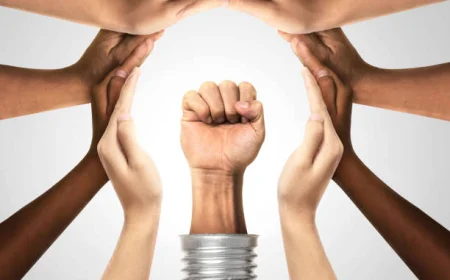
Nepal’s democracy has long faced political instability, making citizen involvement in governance crucial. With recent youth-led movements and new political changes, people have shown their power to influence leadership and demand accountability. However, experts warn against blind political support and emphasize the need for continuous public scrutiny. True democratic strength lies in citizens actively questioning, monitoring, and holding elected leaders accountable to ensure transparency and responsible governance.

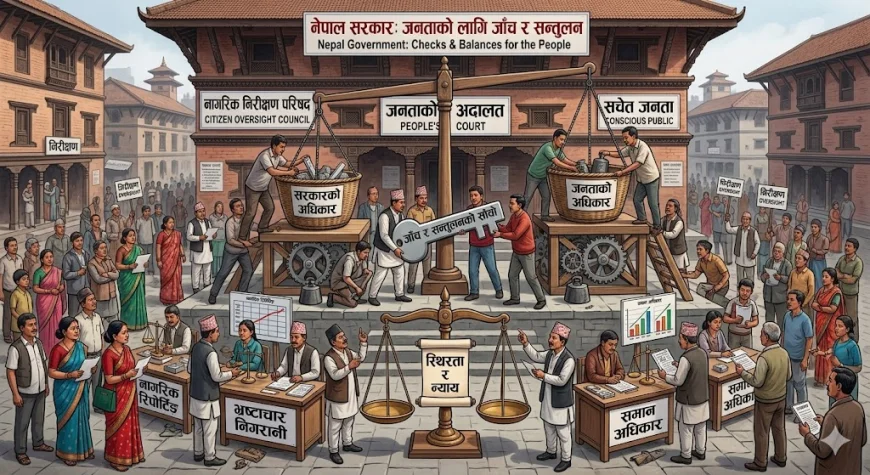


Nepal’s political journey has always been marked by instability, frequent leadership changes, and public dissatisfaction with the governance. Over the years, citizens have repeatedly expressed frustration over unfulfilled promises, weak accountability, and disconnection between elected leaders and the people they serve. In this evolving political landscape, the role of citizens in maintaining check and balance on the government has become more crucial than ever.
The recent youth led movement, often referred to as Gen Z protest, have shown us how powerful public voice can be in shaping political direction. Those movements challenged long standing political norms and brought renewed attention to accountability, transparency, and leadership responsibility. The rise of new political actors alongside the decline of traditional power structures has created a sense of political transformation in Nepal, where citizens have demonstrated that change is possible when collective voices are united.


The emergence of younger and newer leaders has also raised public expectations. Many citizens see this shift as an opportunity for reform, better governance, and more responsive leadership. However, change in leadership alone is not enough to guarantee a long term improvement in governance. The real test lies in whether new leaders can deliver on promises and maintain transparency in decision making.
At the same time, concerns are growing about blind political support, where individuals may follow new or popular leaders without critically evaluating their actions and policies. While hope in new leadership is natural, experts emphasize that democracy functions best when citizens remain informed, critical, and actively engaged rather than passive supporters.


In a democratic system, elected representatives are accountable to the people, not the other way around. This principle requires continuous public oversight through questioning policies, demanding transparency, and participating in civic dialogue. Social media, public forums, and civil society organizations now play a key role in enabling citizens to monitor government actions more closely than ever before.
Nepal’s experience highlights that political change is not a one-time event but an ongoing process. While leadership may change, the responsibility of safeguarding democracy remains with the people. Holding leaders accountable does not mean opposition for the sake of criticism; rather, it means ensuring that power is exercised responsibly and in the public interest.
As Nepal moves forward with new political dynamics and emerging leadership, the strength of its democracy will depend on how actively citizens engage in checks and balances. Ultimately, the true power of governance lies not only in elected officials but in the informed and vigilant hands of the people who elect them.
What's Your Reaction?
 Like
0
Like
0
 Dislike
0
Dislike
0
 Love
0
Love
0
 Funny
0
Funny
0
 Angry
0
Angry
0
 Sad
0
Sad
0
 Wow
0
Wow
0