



















Power vs People: Who Really Pays the Price?




In every society, power is presented as structure; something necessary for order, stability, and progress. Governments say they govern for the people. Institutions claim to protect public interest. Policies are introduced as reforms, development plans, and long-term solutions. On paper, everything is designed to serve the collective good.
But in practice, a persistent question remains beneath all systems of authority: when power is exercised, who actually bears its consequences?


The answer is rarely found in the rooms where decisions are made. It is found outside them—in households adjusting to rising costs, in workers adapting to unstable wages, in students navigating uncertain futures, and in communities trying to survive the aftershocks of decisions they never directly participated in shaping.
Power defines the structure of society. People live inside it.


The distance between decision and consequence
One of the most defining features of power is distance. Decisions are often made far away from the lived realities they affect. A policy discussion in a capital city can translate into immediate changes in remote villages. A regulatory shift in an office can reshape entire industries overnight. A budget adjustment can determine whether essential services expand or shrink.
Yet those making decisions rarely experience their immediate effects.
This distance creates an imbalance, not always intentional, but structurally embedded. The further power moves from consequence, the easier it becomes to treat outcomes as statistics rather than human experiences.
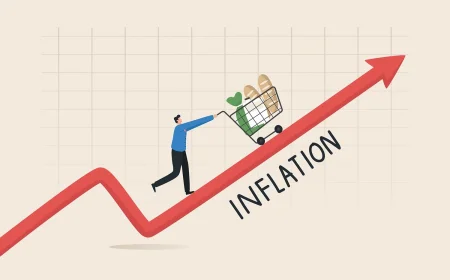
For example, inflation is discussed in percentages. Economic growth is measured in graphs. Employment is presented in numbers. But behind each figure is a person recalculating daily survival, whether rent can be paid on time, whether medicine can be purchased, whether education can continue uninterrupted.
Power often operates in abstraction. People live in reality.
When systems become heavier than the people inside them
Every system; political, economic, or administrative eventually develops weight. Rules accumulate. Procedures expand. Bureaucracy grows. What begins as structure meant to simplify life often becomes something that people must constantly navigate rather than benefit from.
In such systems, access becomes uneven. Those with influence, resources, or proximity to authority move through processes with ease. Those without them face delays, confusion, or exclusion.
This does not always come from explicit intent. But the effect remains the same: the system becomes easier for some and heavier for others.
Over time, this imbalance shapes how people perceive institutions. What is meant to be a public service can start to feel like a barrier. What is meant to be protection can feel like pressure. And what is meant to be justice can feel like endurance.
The silent cost of policy
Policies rarely announce their true cost in advance. They are introduced with promises efficiency, development, modernization, reform. But the real cost appears later, distributed unevenly across society.
A tax reform may stabilize revenue but increase pressure on small businesses. A development project may improve infrastructure but displace communities. A regulatory tightening may improve oversight but create barriers for informal workers. Even well-intentioned policies often produce unintended consequences.
The key issue is not that policies exist, it is that their cost is rarely absorbed equally.
In most cases, those who design policies do not face the immediate friction of their implementation. Meanwhile, ordinary people adjust their lives around them. They change consumption habits, shift careers, migrate, reduce expenses, or absorb uncertainty as a normal condition of survival.
This creates a pattern: benefits are often centralized, while burdens are widely distributed.
Power without proximity to consequence
A major characteristic of modern governance and institutions is insulation. Power is often shielded from direct consequence through layers of administration, representation, and process. While this is designed to ensure stability and continuity, it also creates emotional and practical distance from outcomes.
When decisions do not immediately affect decision-makers, accountability becomes harder to feel rather than just define. Reports replace experience. Briefings replace reality. Feedback becomes delayed, filtered, or statistical.
Meanwhile, people do not experience delay. They experience impact directly.
A hospital policy affects whether treatment is accessible today. A labor decision affects whether wages arrive this month. A pricing change affects whether food is purchased this week. For people, consequences are immediate, not theoretical.
This gap between decision and lived experience is where most tension in society originates.
Crisis reveals the imbalance most clearly
It is during crises economic shocks, political instability, natural disasters, or institutional failures that the imbalance between power and people becomes most visible.
In such moments, responsibility rarely moves upward in the same intensity that consequences move downward. Leadership may shift, statements may be issued, committees may be formed. But the immediate burden is carried elsewhere.
People rebuild homes, adjust finances, relocate livelihoods, and reorganize survival strategies. They absorb uncertainty directly, while systems often respond gradually.
Crisis does not create inequality in responsibility; it reveals it.
The role of people: not passive, but constrained
It would be incorrect to describe people as passive within this structure. People respond continuously through adaptation, resistance, participation, and critique. They vote, protest, organize, question, and negotiate space within systems that shape them.
However, the capacity to respond is not equal across society. Economic security, social position, access to information, and proximity to authority all influence how safely and effectively someone can respond.
For some, speaking up is a manageable risk. For others, it is a direct threat to livelihood or security.
This unevenness means that while people do exert influence, the cost of doing so is distributed unequally.
When accountability weakens, trust follows
A society does not collapse immediately when power becomes distant. Instead, it slowly shifts in perception. Trust weakens first. Then participation declines. Then skepticism becomes normal.
People begin to view institutions not as shared structures, but as external forces. Policies are no longer seen as collective decisions, but as top down impositions. Even necessary reforms can face resistance when trust is low.
At that point, the problem is no longer just about decisions themselves, it is about the relationship between those who decide and those who live with the outcomes.
Power is necessary, but not neutral
It is important to recognize that power itself is not inherently negative. No society functions without governance, structure, or authority. Coordination requires decision-making. Stability requires systems. Development requires planning.
The issue is not the existence of power it is how it is exercised and how closely it remains connected to consequence.
Power becomes problematic when it stops reflecting the realities of the people it governs. When it becomes self-referential. When it prioritizes continuity over accountability. When it treats impact as secondary to intent.
Who really pays the price?
Across economic systems, political structures, and social hierarchies, the pattern remains consistent. Power shapes decisions. People absorb consequences.
The price is not always immediate or visible. Sometimes it appears as financial pressure. Sometimes as reduced opportunity. Sometimes as emotional exhaustion. Sometimes as silent acceptance of instability as normal life.
Meanwhile, power continues to function as design, not experience.
This is the central tension in every society: the separation between those who define outcomes and those who live them.
The question that remains
The question is not only who pays the price, but whether that distribution is inevitable.
A system where power and consequence are completely disconnected will always lean toward imbalance. But a system where accountability is real, feedback is immediate, and lived experience shapes decision making can reduce that gap.
Until then, the pattern continues.
Power defines the structure.
People carry its weight.
And in that imbalance lies the quiet cost of every system we call society.
What's Your Reaction?
 Like
0
Like
0
 Dislike
0
Dislike
0
 Love
0
Love
0
 Funny
0
Funny
0
 Angry
0
Angry
0
 Sad
0
Sad
0
 Wow
0
Wow
0