
















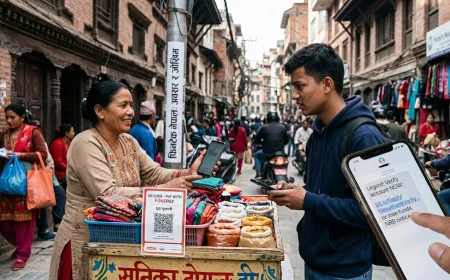




AI’s Alarming Intrusion into Nepal’s Culture and Identity
The rapid spread of artificial intelligence is posing serious challenges to cultural preservation and national identity. Traditional languages, arts, and narratives risk being distorted, diluted, or replaced by AI-generated content. Experts warn that unchecked technological adoption may marginalize indigenous knowledge systems. Balancing innovation with cultural protection has become an urgent national concern.

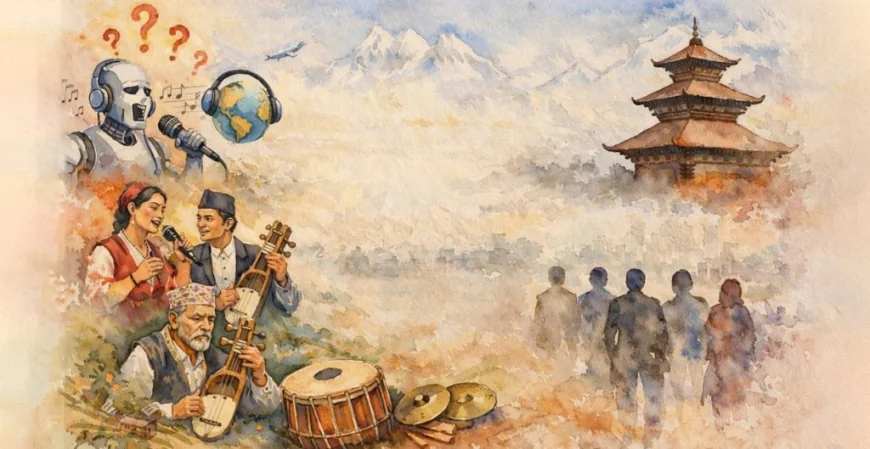


Artificial intelligence is transforming societies at an unprecedented pace, but its growing influence has also raised serious concerns about cultural erosion and identity loss. As AI-generated content becomes more dominant in digital spaces, the uniqueness of local cultures faces the risk of being overshadowed by algorithm-driven narratives that lack historical and social context.
One of the most immediate threats lies in language and expression. AI tools often prioritize widely used global languages, pushing smaller and indigenous languages to the margins. When stories, songs, and traditions are translated, recreated, or summarized by machines, subtle meanings and cultural depth are frequently lost or misrepresented.


Traditional art forms and folklore are also vulnerable. AI-generated music, images, and stories may imitate cultural elements without understanding their significance, reducing centuries-old traditions into aesthetic templates. This raises ethical questions about cultural appropriation and ownership in the digital age.
Another concern is the weakening of cultural authority. When AI becomes a primary source of information, communities risk losing control over how their history and identity are represented. Machine-generated narratives can overwrite lived experiences, replacing oral traditions and local knowledge with simplified or inaccurate versions.


The influence of AI is especially strong among younger generations. As digital platforms dominate education and entertainment, cultural values transmitted through families and communities may gradually lose relevance. This creates a generational disconnect, where technology shapes identity more than heritage does.
However, AI itself is not inherently harmful. When used responsibly, it can help document endangered languages, preserve historical records, and promote cultural awareness. The challenge lies in regulation, ethical design, and ensuring that communities remain active participants rather than passive subjects of technology.
Protecting cultural identity in the age of artificial intelligence requires deliberate policy, public awareness, and cultural sensitivity in technological development. Without conscious efforts to safeguard heritage, AI’s unchecked expansion could quietly redefine identity, leaving future generations disconnected from their roots.
What's Your Reaction?
 Like
0
Like
0
 Dislike
0
Dislike
0
 Love
0
Love
0
 Funny
0
Funny
0
 Angry
0
Angry
0
 Sad
0
Sad
0
 Wow
0
Wow
0